One of the most confusing things I deal with at work is newborn jaundice. It is a complicated process to determine when a jaundice level is critical for a newborn and even more confusing when trying to break it down for new parents to understand. The simplest way I have been able to explain it is this: “all newborns have jaundice and there is nothing you can do to prevent it. Your powerful mama body has been the baby’s filtering system and now their little body has to wake up and filter itself. They do this with their liver and their liver is still small and learning how to do its job, so it takes some time for it to remove all of the jaundice (bilirubin). The baby gets rid of it by peeing and pooping. Therefore, we have to keep feeding the baby, as much as they’ll tolerate, to help their body’s get rid of the jaundice faster”
Here is what I’ve learned about jaundice in my years as a postpartum nurse:
- Jaundice is a build up of red blood cells in the baby’s body. This is called bilirubin
- These red blood cells circulate in their bodies, come to the surface of the skin, and make babies look yellow or orange in color
- Jaundice starts from top and moves its way down through the infant’s body. So their face will often look more yellow before their arms, legs, and body
- Age plays a huge factor: age of hours old the baby is at the time the jaundice levels are checked as well as how many weeks gestation mom was at the time of delivery
- Jaundice levels can now be checked with a machine called a transcutaneous bilirubin device. This is a less invasive means of checking jaundice levels since we do not have to draw blood to get a bilirubin level
- Jaundice can be hereditary, but not always. If a big sibling had jaundice in the past, we will check the new baby more closely
- Babies get rid of their jaundice by peeing and pooping out the extra red blood cells. So nutrients and hydration are some of the most important factors in reducing jaundice levels
- Not all babies need phototherapy (that blue light thing) and can get rid of the jaundice on their own through excretion
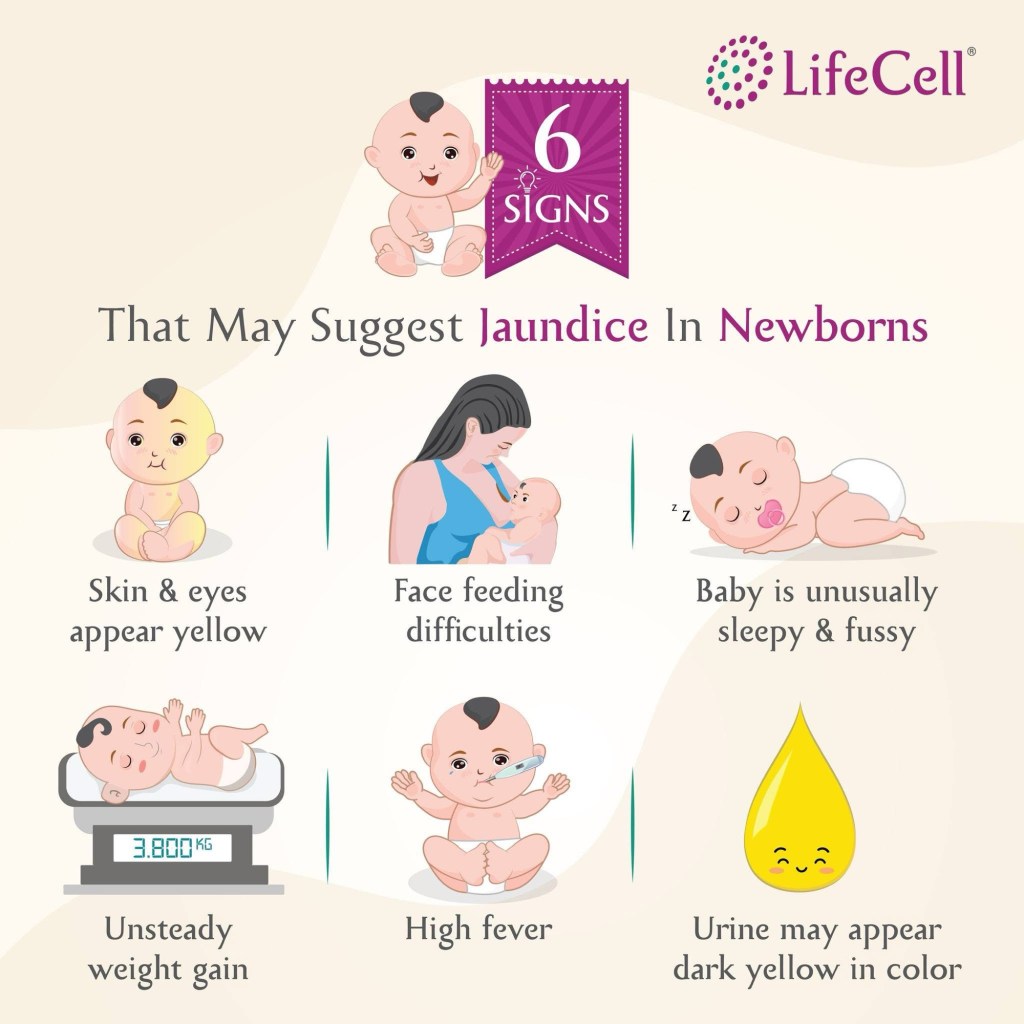
- A baby will be lethargic, not wanting to eat (or eating poorly), and not having adequate pees and poops if their jaundice levels are rising
- If a baby is not treated for jaundice and their levels rise to dangerous levels, it can cause brain damage and be fatal to the baby

So, why do we care about newborn jaundice levels?
As mentioned in #10, jaundice can be a life threatening condition if the newborn is not monitored and treated properly. The bilirubin can build up in the infants body, circulating to their brains, and cause “kernicterus, a type of brain damage that leads to movement problems and hearing loss” (AAP, 2022). A study done in 2022 states that 80% of newborns have some form of jaundice (link listed below) which makes communication between parents and providers essential. In addition, it is important that parents follow up with their baby’s doctor as recommended by the hospital. See the list below on when to be concerned enough to call your baby’s doctor.

When should I call the doctor?
- Your baby’s skin turns darker yellow.
- Your baby’s abdomen, arms, or legs are yellow.
- The whites of your baby’s eyes are yellow.
- Your baby is hard to wake, fussy, or not breastfeeding or taking formula well.
At the end of the day, almost all new babies experience some level of jaundice and most of them are able to get rid of this build up of bilirubin on their own. However, it is key that caregivers monitor and advocate for their newborns to ensure that they are safe and that the jaundice levels are trending downward.
References:
American Academy of Pediatric: https://www.aap.org/en/patient-care/hyperbilirubinemia/?srsltid=AfmBOoqm7V-qb22ghD_uSBZljdSHJ_ZgENRHoPpy2D9-UoVvxw7OEQYN
Parent Education Handout:
Jaundice and your Newborn: https://doi.org/10.1542/peo_document197
Link to a medical journal:
Management of Hyperbilirubinemia in the Newborn Infant 35 or More Weeks of Gestation – https://doi.org/10.1542/peds.2022-058859
I hope some of this helps you to understand newborn jaundice a little better. If you have questions, please feel free to ask me or look at the links above for information from some of the best sources. Let me know your thoughts on the topic. Did anyone have a baby who was jaundice? How was that experience for you? What can you share to help others understand this topic better?
Thanks for reading!
Jo

 From Nurse to Mom